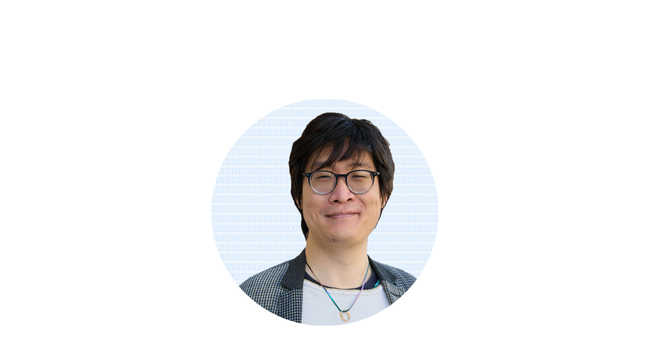
My work centers on developing a theory of machine virtue, i.e. how virtue ethics can be generalized to include AI agents. This is important, because AI systems like ChatGPT have in effect become societal infrastructure with growing impact upon individuals and institutions (e.g. a disruptive force in education, politics, art, news, and social community). They increasingly take on, at scale, responsibility-laden roles like therapist, friend, curator, educator, content-creator, and reporter — yet do not embody the virtues necessary to be excellent within that domain, and as a result exhibit large negative externalities. […] HAI Lab is deeply interested in what it means to be a “good” agent, one that supports human autonomy, rationality, and flourishing, and virtue ethics is one promising approach to articulating that. […] my understanding of virtue has been aided by HAI Lab’s Being and Doing Group where as a computer scientist I can participate in dialogue with world-class philosophers, and the feedback I’ve gained from presenting at lab meetings has been useful to honing and grounding my ideas. Finally, my participation in HAI Lab has also enabled me to help engage with the public and academia, by e.g. giving talks at Edge Esmerelda in concert with HAI Lab, and through their providing resources and time such that I can work on several academic publications (including a recent Nature news and views piece, and technical work related to why current models might struggle with the practical wisdom needed for virtue).
Dr. Joel Lehman. Fellow of the Cosmos Institute, former team co-lead @ OpenAI, founding member Uber AI Labs.
HAI Lab brings together people who care equally about technology and human flourishing, no matter their discipline. It’s a community of philosophical technologists, technological philosophers, and everyone in between. If you like to think deeply, build creatively, and stay grounded in purpose, you’ll find your people here. Every time I come back to HAI Lab events, I’m challenged to pause, reflect on the impact of what I create, and refine the principles guiding my work as an engineer..”
Whitney Deng. AI Systems and Infrastructure Engineer at LinkedIn. BA Columbia, summa cum laude, HAI Lab Old Member.
AI raises deep questions for democratic theory and creates renewed need for clarity on the limits of notions like technocratic government and how they relate to fundamental epistemic constraints. Having regular discussions with other HAI Lab members with computer science and tech backgrounds is helping me keep my theoretical work connected to the rapid pace of technological development in AI, and participating in HAI Lab’s Making and Breaking Group makes thinking about the risks and benefits of AI tangible in a hands-on way.
Victor Karl Magnússon, DPhil candidate, Philosophy, University of Oxford
HAI Lab feels like a dojo for learning to see and act in the big picture of AI. We refine one another’s practical and philosophical skills discussing what matters in the field and where things are going, and we inspire each other to create conceptual and code artefacts. The community is extraordinary: I met my co-founder at a HAI event, and the conversations continue to shape how I think about building. Beyond research, the lab gives me a kind of sanity and perspective training that I draw on every day as a technical founder.
Dr. Vincent Wang-Maścianica. Senior Research Fellow in the Cosmos Institute, Co-Founder of a startup in stealth, DPhil in Computer Science, University of Oxford.